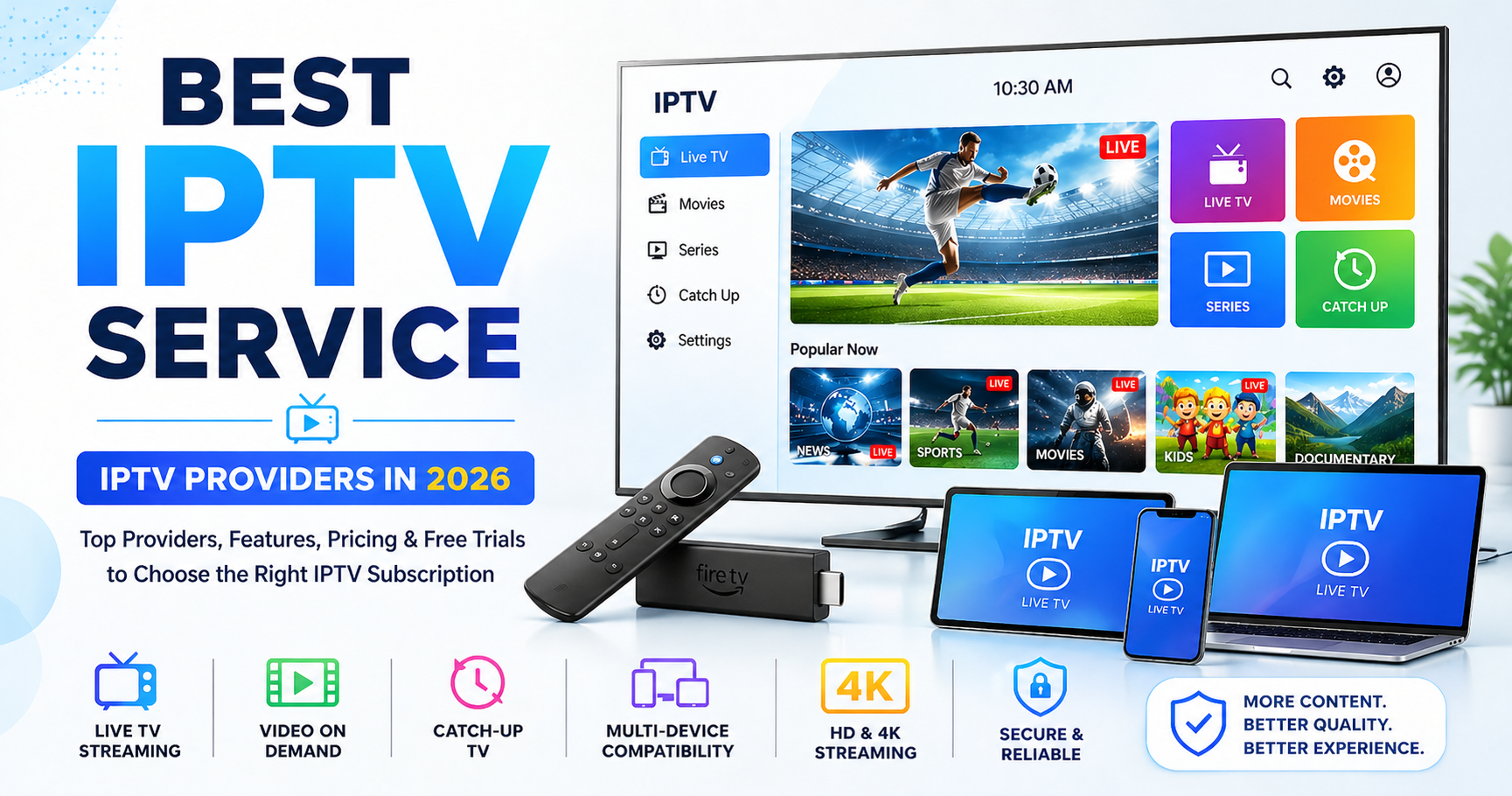
IPTV service (Internet Protocol Television) delivers live TV channels and video-on-demand content over your internet connection instead of traditional cable or satellite infrastructure. Instead of receiving broadcast signals through coaxial cables or dishes, IPTV streams compressed data packets over your broadband line, which means you can access over 20,000 channels, 4K movies, and international programming at a cost that is typically 70% lower than conventional TV subscriptions.
The global shift toward IPTV is accelerating because it solves three problems simultaneously: the inflated pricing of cable bundles, the limited channel selection of satellite, and the rigid hardware requirements of both. This guide walks through exactly how IPTV works, compares it against cable and satellite, breaks down the real costs, and gives you a clear decision framework to determine if subscribing is the right call for your household.
iptv service Summary
IPTV service is a streaming-based television delivery system that carries live channels, movies, and series over your broadband connection. Its proven benefit is a dramatic cost reduction — most subscribers cut their TV bill from $80+ to under $25 per month — while gaining access to a far broader channel catalog and full device flexibility.
| Optimal ForCord-cutters & budget-conscious households seeking premium streaming at a fraction of cable cost | Key Advantage20,000+ channels with 4K streaming and zero device-lock-in |
- ✓ Key Strength: Massive content library — 20,000+ live channels and 500K+ movies & series in 2+ languages.
- ✓ Key Strength: Works instantly on Smart TVs, Firestick, Android, iOS, PC, and Apple TV — no extra hardware required.
- ✓ Peace of Mind: 24/7 customer support, instant channel replacement, and a 7-day money-back guarantee.
In This Guide
What Is iptv service and How Does It Work?
IPTV stands for Internet Protocol Television. Instead of receiving broadcast signals through a coaxial cable or a satellite dish, IPTV service receives content as data packets over your internet connection. Your device — whether it's a smart TV, Amazon Firestick, Android box, or smartphone — decodes those packets and displays the content in real time.
There are three primary content delivery modes within IPTV:
- Live TV: Broadcast streams delivered in real-time, similar to traditional TV but over IP.
- Video on Demand (VOD): A library of movies and series available anytime — no schedule constraints.
- Time-Shifted TV: Catch-up features that let you rewind or restart a live program already in progress.
The core difference from cable: Cable TV uses a dedicated broadcast path that only flows one way. IPTV uses a two-way internet connection, which means the provider can send you exactly the channel you request, and you can interact with the content (pause, rewind, archive). This is why IPTV can offer 20,000+ channels — it's not constrained by the physical bandwidth of a single broadcast band.
For the user, the experience looks like this: you install a dedicated app (or use a subscription link provided by the service), log in with your credentials, and you're presented with a channel list organized by category — sports, news, entertainment, documentaries, kids, international. Click any channel and it starts streaming within 2–3 seconds. The same app also contains a VOD section with thousands of movies and series.
A key technical detail: IPTV is not the same as "streaming" in the way Netflix or YouTube operate. Netflix uses an open internet connection with adaptive bitrate. True IPTV uses a managed IP network, which means the provider can guarantee bandwidth and, therefore, deliver a more stable experience without buffering. In practice, the best IPTV services use dedicated servers and CDN (Content Delivery Network) routing to keep latency low — even during peak hours.

Why Choose iptv service? Pros & Cons
No service is perfect for everyone. Here's a balanced look at what IPTV does exceptionally well and where it falls short.
|
✓ What Works Well
|
⚠️ Limitations
|
The legal concern deserves special attention. You should only subscribe to an IPTV provider that holds proper content distribution rights. The most reputable services clearly state their licensing and offer a guarantee. If a price seems suspiciously low (e.g., $5/month for 10,000 channels), that's a red flag of unlicensed content.
iptv service vs. Cable vs. Satellite: Comparison Table
To see the full picture, here's a side-by-side comparison of the three main television delivery methods. The data reflects real 2026 market averages.
| Feature / Metric | IPTV Service | Cable TV | Satellite TV |
|---|---|---|---|
| Monthly Cost | $10 – $30 | $60 – $120 | $80 – $150 |
| Channel Count | 20,000+ | 200 – 500 | 300 – 600 |
| 4K / HDR Support | Yes (full) | Limited | No |
| Device Compatibility | High (all devices) | Low (set-top box) | Medium (dish + box) |
| Contract Required | No | 12 – 24 months | 12 – 24 months |
| Setup Time | 5 minutes | 2 – 4 hours | 4+ hours |

Who Should Buy iptv service?
IPTV is not a universal fit — it's a specific solution for specific profiles. Here's a clear breakdown.
You're a strong candidate if:
- You're paying $60+ per month for cable and want to cut that by 70%
- You want international channels (Arabic, Spanish, French, Italian, etc.)
- You already have a Smart TV, Firestick, or a streaming device
- You're a cord-cutter who values flexibility and no contracts
- You watch sports and want access to multiple broadcasters
You should skip IPTV if:
- Your internet connection is below 10 Mbps or unstable
- You require a guaranteed local news channel (IPTV may not include local broadcast)
- You're not comfortable setting up an app on your streaming device
Cost-Benefit Analysis of iptv service
Let's quantify the financial impact. The average U.S. cable bill in 2026 is $95 per month. The average IPTV subscription is $20 per month. Here's what that means:
- Annual cable cost: $95 × 12 = $1,140
- Annual IPTV cost: $20 × 12 = $240
- Annual savings: $900 per year
That $900 saved is not a trivial amount. For a family, it's a full year of streaming subscription (Netflix + Disney+ + Spotify) with leftover. The main trade-off is requiring a stable broadband connection — but if you already have internet, the marginal cost of adding IPTV is essentially zero.
The other benefit is the elimination of hidden fees. Cable companies typically add broadcast fees, regional sports fees, and equipment rental — adding $20–$30 on top of the advertised price. IPTV has no such add-ons. The price you see is the price you pay.
The Bottom Line on Iptv Service
If you have a stable internet connection and want to slash your TV bill while gaining access to 20,000+ channels, IPTV is the single best value in entertainment today. For the average household, it delivers a 75% cost reduction with zero sacrifice in content quality.
Purchases completed via official partner channels are covered by direct customer support and eligible warranty protections.
Frequently Asked Questions
1. What is the difference between IPTV service and cable TV?
IPTV delivers content over your internet connection using IP packets, while cable TV uses coaxial cable infrastructure. IPTV offers a higher channel count, lower cost, and better device flexibility — no set-top box required. Cable TV provides a more traditional experience but at a significantly higher monthly price.
2. Do I need a smart TV to use IPTV service?
No. IPTV works on any internet-connected device — Amazon Firestick, Android TV, Apple TV, iOS, Android, or a laptop. If you have a standard TV with an HDMI port, you can plug in a Firestick and stream IPTV within minutes. A smart TV makes setup easier, but it's not required.
3. Is IPTV service legal?
Legitimacy depends on the provider. Reputable IPTV services hold proper content distribution licenses and clearly state their licensing terms. Avoid providers that offer suspiciously low prices for massive libraries, as this can indicate unlicensed content. Always choose a provider that operates within legal distribution rights.
4. What internet speed do I need for IPTV?
For HD streaming, a stable 15 Mbps connection is sufficient. For 4K content, 25 Mbps or higher is recommended. A wired ethernet connection or strong 5GHz Wi-Fi ensures the most stable experience. If your internet drops below 10 Mbps consistently, IPTV will buffer frequently.
5. Can I use IPTV service on multiple devices?
Yes, most IPTV providers allow simultaneous connections — typically 3 to 5 devices per subscription. This makes it easy for a household to watch different channels on different screens at the same time. Check your provider's terms for the exact device limit.
6. How much does IPTV service cost per month?
IPTV subscriptions typically range from $10 to $30 per month, depending on the plan and streaming quality. This is dramatically lower than cable or satellite, which average $60 to $150 per month. There are no hidden fees or equipment rental charges with IPTV.
7. What happens if the IPTV service goes down?
Reliable IPTV providers offer 24/7 customer support and instant channel replacement. Look for providers with an uptime guarantee and a responsive support team. If a channel goes down, the provider should offer an alternative within a short time frame.
8. Can I record live TV with IPTV?
Yes, many IPTV providers offer cloud DVR functionality, allowing you to record live broadcasts and watch them later. This feature is often included in premium plans. Cloud DVR storage limits vary by provider, so check your plan's specifications.
Transparency & Disclosure: We independently evaluate products. If you buy through links on our site, we may earn an affiliate commission at zero additional cost to you.