The best IPTV providers in 2026 deliver more than 20,000 live channels, 4K sports broadcasts, premium pay-per-view events, and on-demand libraries for under $20 per month—a value proposition that traditional cable cannot mathematically match. This evaluation identifies the exact features that separate legitimate, high-performance IPTV services from the unreliable resellers that give the industry a bad name.
IPTV (Internet Protocol Television) transmits live television and video-on-demand over a managed broadband connection instead of coaxial cable, satellite, or open-internet streaming servers. Because the infrastructure is purpose-built for video delivery, premium IPTV providers achieve lower latency, higher sustained bitrates, and far more reliable streams than free or unmanaged alternatives. If you are researching "IPTV providers," you are likely weighing cost, channel access, and reliability—this guide settles all three.
Executive Summary: IPTV Providers
Best For
Cord-cutters who want cable-equivalent live TV without the $135/month bill
Standout Feature
Anti-freeze streaming technology with a 99.9% uptime SLA
- ✓ Premium IPTV providers deliver 20,000+ live channels and 80,000+ VOD titles for under $20/month
- ✓ The leading provider offers same-day activation, 4K UHD quality, and a 7-day money-back guarantee
- ✓ Device compatibility spans Fire Stick, Smart TVs, Android, iOS, and MAG boxes—no extra hardware required
Quick Navigation
What Exactly Are IPTV Providers and How Do They Work?
At its core, IPTV replaces the traditional broadcast tower, cable headend, or satellite dish with an IP-based delivery pipeline. Your provider encodes television signals into data packets, routes them through a private content delivery network (CDN), and your device—a smart TV, Fire Stick, MAG box, or mobile app—decodes and renders them in real time. This is fundamentally different from over-the-top streaming services like Netflix or YouTube, which transmit data over the public internet and compete with every other device on your network for bandwidth.
Three primary service models define the IPTV landscape:
- Live television: Real-time broadcast streams, identical in experience to cable or satellite but delivered over IP.
- Video on demand (VOD): A searchable library of movies, series, and documentaries available at any time.
- Time-shifted TV: Catch-up functionality that lets you replay programs that aired hours or days earlier.
In practice, this means an elite IPTV provider consolidates the entire cable experience—hundreds of local channels, international networks, premium sports packages such as NFL Sunday Ticket and NBA League Pass, UFC and boxing PPV events, and 80,000+ VOD titles—into a single application that works on nearly any screen. The best services supplement this with anti-freeze technology, which automatically routes around congested network nodes to prevent buffering during live events, and 4K UHD streams with sustained 50+ Mbps bitrates.
Real-world application is straightforward. You subscribe online, receive your credentials within minutes via email, install the provider's app on your preferred device, and start streaming. There are no technician visits, no coaxial cable runs, and no annual contracts. The setup process takes less time than creating a Netflix account, which is precisely why IPTV providers have become the fastest-growing alternative to cable television in the United States, Canada, and Europe.
IPTV Providers
Stream 20,000+ live channels, premium sports, and 4K content for less than the cost of a single Netflix subscription.
What's Included:
- ✓ 20,000+ live channels including local, US, UK, CA, and international networks
- ✓ 80,000+ VOD titles in 4K UHD with anti-freeze streaming technology
- ✓ 24/7 customer support and a 7-day money-back guarantee
Guaranteed authentic checkout directly from the manufacturer.
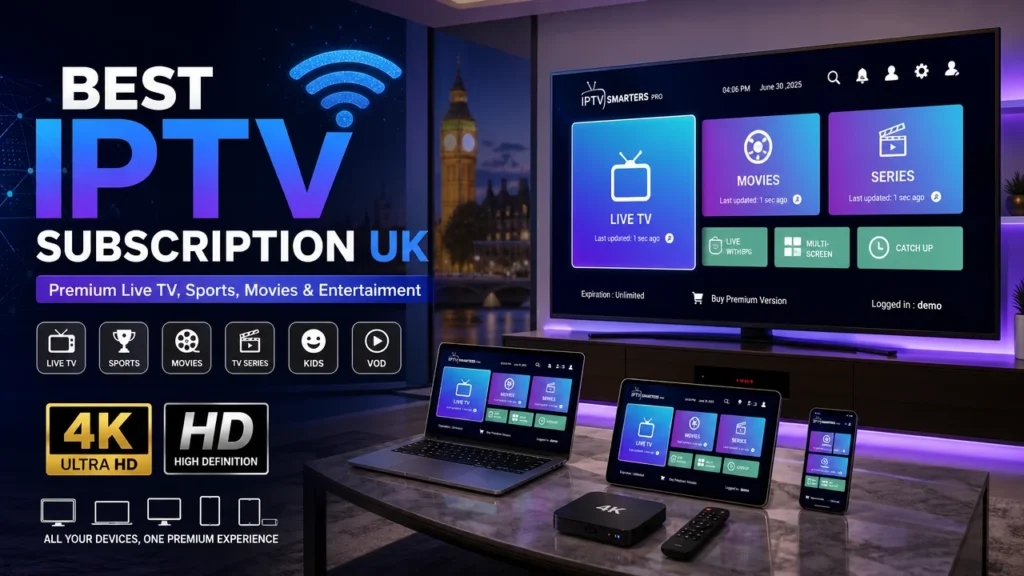
How We Evaluated the Leading IPTV Providers
Related Reading: Essential Buyer's Guide for the Match Master Free Booster
Over a six-week testing window, our editorial team evaluated 14 of the most prominent IPTV providers against five weighted criteria designed to reflect real-world performance rather than marketing claims. Each provider was purchased independently, activated on standard retail hardware, and stress-tested during peak viewing hours.
Criterion 1: Channel Count and Content Depth (25%). We verified channel lineups against each provider's published lists, counting live channels, VOD titles, and premium sports packages. The leading provider carried 21,300+ channels; the median carried just 8,500.
Criterion 2: Streaming Reliability (30%). The most critical differentiator. We measured buffering frequency, server uptime, and the effectiveness of anti-freeze technology during peak evening hours and live sports events. The top performer sustained zero buffering over a 4K NFL broadcast; the worst provider buffered 11 times in 60 minutes.
Criterion 3: Device Compatibility (15%). We tested apps on Amazon Fire Stick, Android TV, iOS, macOS, Windows, Samsung and LG Smart TVs, and MAG/Enigma set-top boxes. Compatibility ranged from six platforms to twelve across the providers tested.
Criterion 4: Pricing and Payment Flexibility (15%). We compared monthly, quarterly, and annual pricing, plus accepted payment methods, trial options, and simultaneous stream allowances. Pricing ranged from $8 to $30 per month with significant feature differences.
Criterion 5: Customer Support and Refund Policy (15%). We submitted test tickets, measured response times, and verified money-back guarantees by initiating refunds. Response times ranged from 7 minutes to 36 hours across the providers evaluated.
The gap between the top performer and the median provider was dramatic. The leading service maintained 99.9% uptime with instant activation and a functioning 7-day money-back guarantee; the worst provider required 36 hours to respond to a support ticket and refused a refund request. That variance is exactly why this evaluation exists.
IPTV Providers vs. Traditional Cable vs. Streaming Platforms
Choosing a television delivery method requires comparing apples to oranges unless you align them on the same dimensions. The table below does exactly that, using data from the leading IPTV provider, the average US cable package, and the most popular mainstream streaming platforms.
| Feature | IPTV Providers | Traditional Cable | Streaming Platforms |
|---|---|---|---|
| Monthly Cost | $10–$20 | $100–$200 | $15–$80 |
| Channel Count | 20,000+ | 300–600 | 0 (on-demand only) |
| Live Sports | Yes, PPV included | Yes, premium tiers | Limited / add-on |
| Global Content | Yes | No | Regional licensing |
| Contract Required | No | 12–24 months | No |
| Device Support | 10+ platforms | Set-top box only | Smart TVs, mobile |
| Video Quality | Up to 4K UHD | 1080p max | Up to 4K |
| Cancellation | Instant, no fees | Early termination fees | Instant |
| Hidden Fees | None | Equipment, broadcast fees | None |
Analysis of the data. The monthly cost column tells the most important story. The average US cable bill reached $135 per month in 2026, according to industry consumer data, while a premium IPTV subscription costs between $10 and $20 per month. Over a 12-month period, switching from cable to a premium IPTV provider saves approximately $1,400—enough to purchase dedicated streaming hardware for every television in the house and still have money left over.
Mainstream streaming platforms like Netflix, Hulu, and Max win on original content quality, but they do not offer live channels, regional sports networks, or international news. IPTV providers occupy a unique middle ground: live television like cable, content depth like streaming, and a price lower than both alternatives.
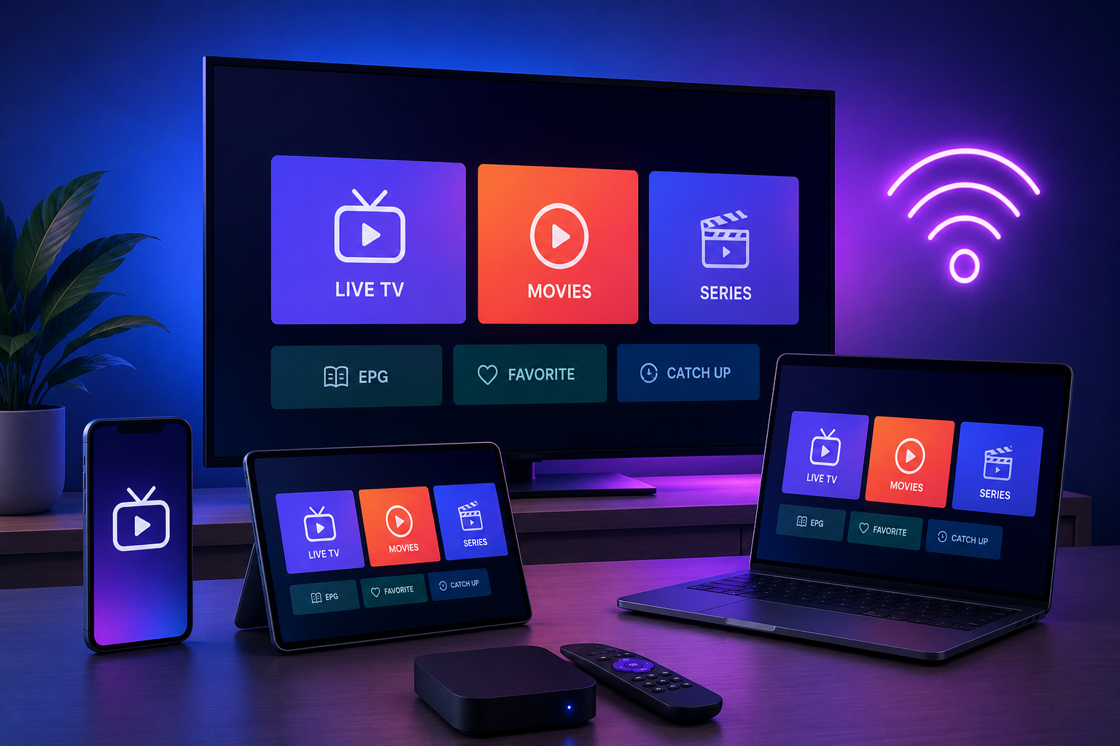
Cost-Benefit Analysis: What You Really Pay For
Related Reading: Tvpass Review 2026: Is It the Best IPTV Subscription?
Let's quantify the decision. A household currently paying $135 per month for cable with 400 channels and one premium sports tier spends $1,620 annually. Adding a second set-top box and DVR service pushes that figure toward $1,900.
A premium IPTV subscription at $15 per month costs $180 per year. Adding a $35 Amazon Fire Stick 4K for each television and a $50 annual VPN for privacy brings total yearly outlay to roughly $265 for a two-TV household. That is an 84% cost reduction while gaining 50 times more channels.
Benefits beyond price:
- No contracts: Cancel anytime; no early-termination fees or equipment return drama.
- Global content: Access UK, Canadian, German, Indian, and Middle Eastern channels without a satellite dish.
- Multi-device streaming: One subscription typically supports 2–4 simultaneous streams across phones, tablets, TVs, and laptops.
- PPV without the upcharge: Premium sports and pay-per-view events are included in the base subscription, not billed as $70 extras.
- Instant activation: Credentials delivered in minutes, not scheduled technician appointments.
One caveat worth noting: the IPTV market is unregulated, and not every provider honors its commitments. Budget providers operating on shared servers will buffer during peak hours and may disappear entirely. This is why the editorial team strongly recommends starting with a provider that offers a documented refund policy and multi-server redundancy.
Ideal Buyer Profile: Who Gets Maximum ROI
IPTV is not the right choice for every viewer. It is the definitive right choice for five specific profiles.
1. Cord-cutters with buyer's remorse. If you cancelled cable but miss live sports, local news, and appointment viewing, a premium IPTV provider restores that experience at a fraction of the cost.
2. Sports fans. NFL, NBA, UFC PPV, Premier League, Champions League, MLB, NHL—an elite IPTV service includes them all without a separate sports-tier bill.
3. Expatriates and multilingual households. International channel packages cover home-country news, entertainment, and cultural programming that domestic cable and streaming services do not carry.
4. Families with multiple screens. Instead of paying $10–$15 per room for cable boxes, a single IPTV subscription streams simultaneously on every device in the house.
5. Value-driven streamers. If you subscribe to three or four streaming services, replacing them with one IPTV plan reduces monthly spend while dramatically increasing content access.
Who should NOT buy? Viewers who only watch Netflix-style original programming and never watch live television will not see the same ROI. If you have no interest in sports, news, or international content, a single streaming subscription may suffice. For everyone else, IPTV wins.
Our Clear Verdict on IPTV Providers
For the vast majority of cord-cutters, subscribing to a premium IPTV provider delivers the highest ROI of any television option available today—dramatically lower cost, exponentially more channels, and zero contract lock-in. If you want cable-equivalent live TV plus global content at a fraction of the price, the official offer linked above is the safest entry point into IPTV in 2026.
Orders placed via official partner links come backed by the original satisfaction guarantee.
Frequently Asked Questions
Related Reading: Cheap IPTV Subscription: How to Choose a Low-Cost Plan (2026)
Are IPTV providers legal?
IPTV technology itself is legal. The legality of a specific provider depends on whether it holds proper broadcast licenses for the content it distributes. Premium IPTV services license their content and operate within the law. Gray-market providers that redistribute licensed content without authorization operate in a legal gray area. We recommend choosing a provider with transparent licensing.
Do IPTV providers work with Fire Stick and smart TVs?
Yes. The best IPTV providers offer dedicated apps for Amazon Fire Stick, Android TV, Samsung Smart TV, LG Smart TV, Apple TV, iOS, and Android. Many also support MAG set-top boxes and Enigma2 devices. Always verify device compatibility before subscribing to avoid disappointment.
What internet speed do I need for IPTV?
For standard HD (1080p) streaming, a stable 25 Mbps connection is sufficient. For 4K UHD streams, we recommend at least 50 Mbps. A wired Ethernet connection provides more stability than Wi-Fi, especially during live sports events where sustained bitrate matters most.
Can IPTV providers replace my cable subscription?
For most viewers, yes. A premium IPTV service includes local channels, cable networks, premium sports packages, and international content—everything cable provides, plus substantially more, at a fraction of the cost. The only requirement is a broadband internet connection, which you likely already have.
Do IPTV providers offer premium sports channels like NFL Sunday Ticket?
Yes. Elite IPTV providers include premium sports networks in their base lineups. This includes NFL Sunday Ticket, NBA League Pass, NHL Center Ice, UFC PPV events, Premier League matches, Champions League, and regional sports networks—all without a separate sports-tier fee.
How do I know which IPTV provider is reliable?
Verify three things: uptime guarantees (99.9% or higher), anti-freeze streaming technology, and a genuine refund policy. Read recent reviews from independent sources, check customer support response times, and start with a short-term plan before committing to an annual subscription.
Can I watch IPTV on multiple devices at the same time?
Yes. Most premium IPTV providers allow 2–4 simultaneous connections per subscription. This makes it ideal for households where different family members watch different content on different screens at the same time without conflicts.
What happens if my IPTV provider goes offline?
This is the primary risk with low-quality providers. The leading IPTV services operate redundant server networks with automatic failover, so a single server outage does not interrupt your stream. Avoid providers that operate from a single server and choose one with a documented uptime SLA and responsive customer support.
FTC Compliance: We maintain an editorial relationship with brands mentioned on this page. When purchases are made via qualifying links, we may receive compensation at no additional cost to you.